Student Services : Tuition & Fees : Sitemap : Contact Us  
 
Why UC Santa Cruz?
Majors & Courses
 
Division of the Arts
Division of Humanities
Division of Physical and Biological Sciences
Division of Social Sciences
Jack Baskin School of Engineering
Publications
Housing
Sports & Recreation
FAQ
Guide for Parents and Guardians
Counselor Information
 
 
UCSC General Catalog Site
Schedule of Classes Site
Academic and Administrative Calendar Site
 
[+] help and feedback
 
The Biochemistry and Molecular Biology Major


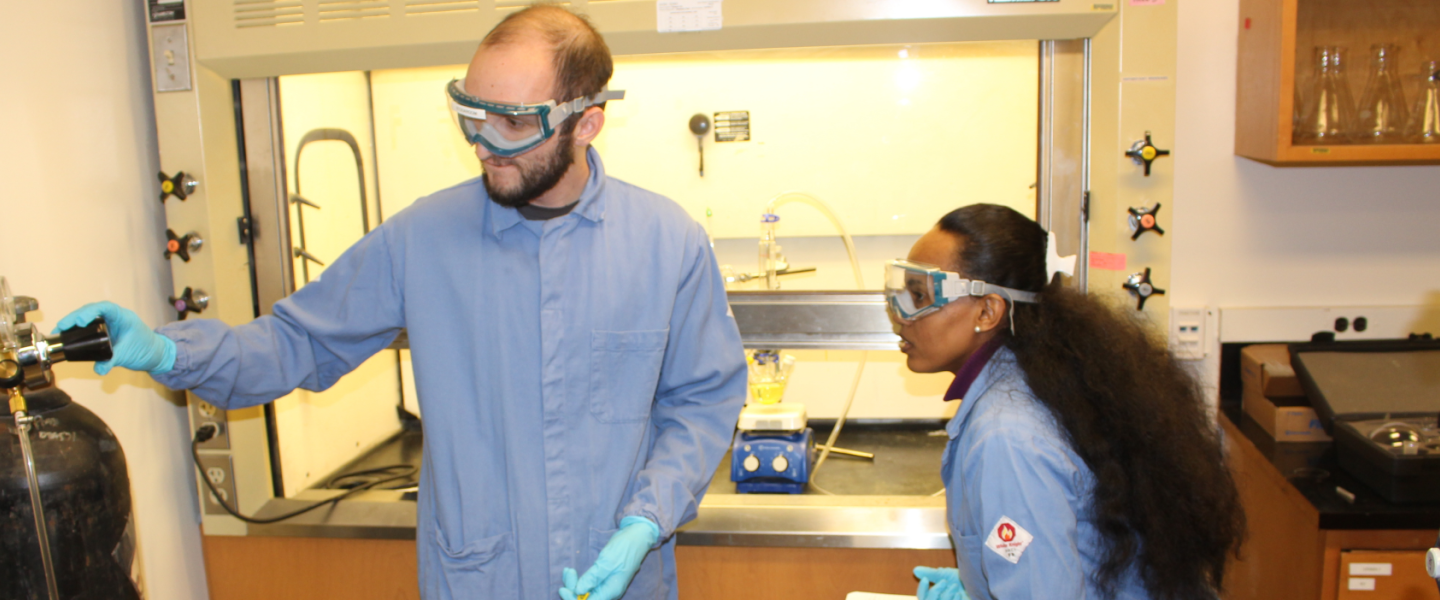
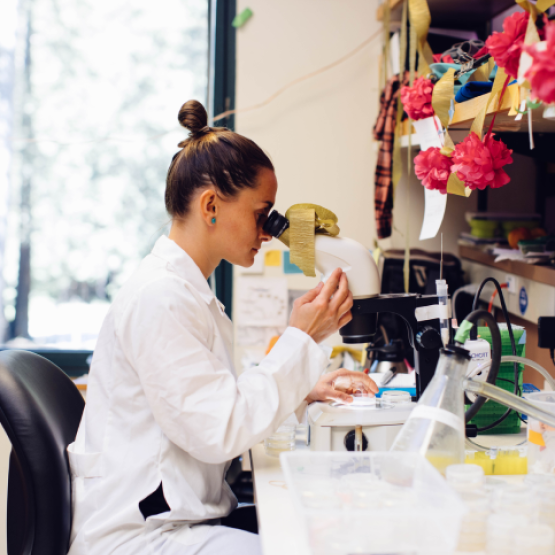
X-ray crystallographic laboratory


The biochemistry and molecular biology major constitutes an integrated curriculum of basic instruction in biology, chemistry, mathematics, and physics, followed by the opportunity to pursue advanced study in specialized areas of interest. In modern, well-equipped laboratories, distinguished faculty are engaged in frontline research. The Departments of Chemistry and Biochemistry and MCD Biology host a very active seminar series of national and international scholars in which advanced undergraduates are encouraged to participate.

Study and Research Opportunities

  • B.S.
  • Opportunities for independent research and study
  • Advanced undergraduates may take one or more graduate courses offered in chemistry and biochemistry with the consent of the instructor.
Biochemistry09.pdf
  More Information
 

Catalog Description

Information about the biochemistry major

E-mail: chemistryadvising@ucsc.edu

Chemistry and Biochemistry faculty and research

MCD Biology faculty and research

Undergraduate Affairs
Physical and Biological Sciences
387 Thimann Labs
University of California, Santa Cruz
1156 High Street
Santa Cruz, California 95064
(831) 459-4143

undergrad.pbsci.ucsc.edu/

High School Preparation
In addition to completing the courses required for UC admission, high school students who intend to major in biochemistry and molecular biology should take courses in biology, chemistry, physics, and advanced mathematics (precalculus).

Transfer Preparation
Junior transfer students who plan to major in biochemistry and molecular biology should complete introductory biology courses in cell and molecular biology and organismic biology, introductory calculus courses, introductory and organic chemistry courses, and introductory calculus-based physics.

If the institution offers a physics course based on calculus as well as a non-calculus-based course, the student should take the calculus-based course. Prospective transfer students should consult with a community college adviser regarding details of course transferability, and soon after arrival at UC Santa Cruz they should meet with a Physical and Biological Sciences Undergraduate Affairs adviser in order to clarify their transfer credit status. UC Santa Cruz lower-division requirements for the B.S. degree in biochemistry and molecular biology are:

• Chemistry 1A, 1B/M, and 1C/N, General Chemistry with Laboratory (three quarters)
• Chemistry 108A/L and 108B/M, Organic Chemistry with Laboratory (two quarters); or Chemistry 112A/L, 112B/M, 112C/N, Organic Chemistry with Laboratory (three quarters)
• Biology 20A and 20B, Introductory Biology Sequence (two quarters)
• Mathematics 11A-B, Calculus with Applications (two quarters) or Mathematics 19A-B, Calculus for Science, Engineering, and Mathematics (two quarters)
• Mathematics 22, Introduction to Calculus of Several Variables
• Physics 5A/L, 5B/M, and 5C/N, Introduction to Physics with Laboratory (three quarters) or Physics 6A/L, 6B/M, and 6C/N,Introductory Physics with Laboratory (three quarters)

While it is not a requirement for admission, students from California community colleges may complete the Intersegmental General Education Transfer Curriculum (IGETC). A completed and certified IGETC program satisfies the university’s general education requirements. To learn more about IGETC and its requirements, prospective transfer students should consult with their transfer center counselor.

However, students planning to major in the sciences and engineering are not well served by completing IGETC due to the extensive lower-division major preparation course load and related prerequisite course requirements. Students interested in these high-unit majors are encouraged to complete courses equivalent to the specific program’s lower-division major requirements first and the university’s broader general education equivalents second. Please see www.assist.org to identify these course equivalents.


Careers

Biochemistry
Biomedical engineering
Biotechnology
Cell biology
Chemical manufacturing
Clinical chemistry
Dentistry
Environmental chemistry
Genetic engineering
Government regulation
Medical research
Medical technology
Medicine
Microbiology
Molecular biology
Pharmaceutical research
Pharmacology
Physiology
Public health
Scientific writing
Teaching
Veterinary medicine

These are only samples of the field’s many possibilities.

Recognition
Harry Noller, the Robert L. Sinsheimer Professor of Molecular Biology and director of the Center for Molecular Biology of RNA, is widely recognized for his studies of ribosomes. In 2003, he won the first Lifetime Achievement Award from the RNA Society. Manuel Ares, a professor of molecular, cell, and developmental biology, used a $1 million grant from the Howard Hughes Medical Institute to form the Hughes Undergraduate Research Laboratory, which focuses on genomics.

Alum Focus
Dr. Joseph DeRisi (B.A., biochemistry and molecular biology, ’92) is well known for his contributions in discovering the SARS virus. His breakthrough creation of a viral detection platform for malaria and other infectious diseases has helped advance biomedicine’s ability to detect both existing and new viruses and may contribute to a cure for malaria. In recognition of his contributions, Dr. DeRisi, who is a Howard Hughes Medical Institute investigator and professor of biochemistry at UCSF, won a MacArthur “genius” award grant in 2004 and a Heinz Award in 2008. Dr. DeRisi is also known for his commitment to free and open-access scientific publishing.

Program Planning Notes
Students who do not begin the lower-division requirements during their first year may have difficulty completing the program within four years. Transfer students may also have problems completing the program within the usual time, depending upon whether or not equivalent courses have been taken at their previous institutions. The adviser works closely with students interested in pursuing the major to insure that they begin the program immediately and follow the appropriate steps toward its completion.

It is strongly recommended that students avail themselves of the opportunities to obtain firsthand research experience through either independent study or senior thesis research. A number of graduate courses in biochemistry and molecular biology are offered by the biology, chemistry, and biochemistry programs. Advanced undergraduates with the necessary background may take one or more of these courses with the consent of the instructor; however, graduate courses may not be substituted for the required elective courses.

Comprehensive Requirement
Students have two options for fulfilling the senior comprehensive requirement: (a) achieving a score at or above the 50th percentile on the Graduate Record Examination (GRE) Biochemistry, Cell, and Molecular Biology Subject Test, or (b) completing a senior thesis sponsored or cosponsored by a faculty member affiliated with the biochemistry and molecular biology program.